Outlook for cereals output improves slightly
The Food and Agriculture Organisation (FAO) in its latest Cereal Supply and Demand Brief, has raised the forecast for world cereal production in 2016 slightly to nearly 2,526 million tonnes, reports NaijaAgroNet.

This figure, NaijaAgroNet notes is virtually the same as in 2015 and potentially on course to be the second-largest global harvest ever.


According to FAO, the larger figure results almost entirely from improved prospects for wheat production, as winter weather conditions have been favourable for prospective yields in the European Union, the Russian Federation and Ukraine.


“At 717 million tonnes, the 2016 wheat output forecast remains 16 million tonnes short of last year's record,” experts at FAO said.


The Cereal Supply and Demand Briefmade available to NaijaAgroNet, FAO says new production forecast for global coarse grains including barley, maize, millet, oats, rye and sorghum stands at 1,314 million tonnes, about one per cent below the 2015 output.


FAO, NaijaAgroNet gathered, left unchanged its worldwide rice production forecast at 495 million tonnes, about one per cent higher than the previous year, although the full impact of the El Niño weather phenomenon will not be clear for a few more months.


“World cereal utilization in the season ahead is expected to rise by only 1.1 percent due to slower growth in the use of cereals - especially wheat and barley - as livestock feed,” FAO said.


As a result, the world body also said that cereal stocks are likely to drop by 3.3 per cent or 21 million tonnes over the course of the new season, while stocks are forecast to drop most in Brazil, Thailand, India, China, Morocco, the Islamic Republic of Iran, Argentina and South Africa.


As said by FAO world trade in cereals is expected to decline slightly to 367 million tonnes with sharp drops in China's imports of barley and sorghum as well as EU imports of maize, more than offsetting soaring imports of maize by drought-stricken countries in southern Africa.


Isaac Oyimah/GEE

... Linking agrobiz, sustainable environs, people & technology
Continue reading

Drones assist Philippine farmers prepare for climate disasters

The government of the Philippines in collaboration with the Food and Agriculture Organisation (FAO) has started using unmanned aerial drones to assess where farmlands are most at risk from natural disasters and quickly assess damages after they strike, NaijaAgroNetreports.

This, NaijaAgroNet also reports is in a bid to stay ahead of the negative impacts of climate change, floods and typhoons on food security, especially in the Philippines.


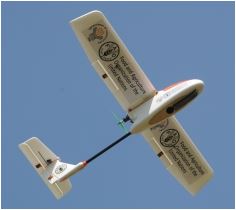
In addition, under a pilot phase of the still-fledgling project funded by the Ministry of Agriculture of the Philippines and the FAO, two drones have already been sent soaring over the Philippines provinces that have been affected by the current El Niño.


NaijaAgroNet equally reports that some 25 FAO and government technical experts are ready to be deployed across the archipelago to support drone missions. They were recently trained over three weeks on how to fly the drones and learned a range of remote aerial assessment methods.


The drones, NaijaAgroNet reports, are equipped with navigation and photogrammetric equipment that could generate detailed and data rich maps from aerial photographs including Normalized Difference Vegetation Index or NDVIa formula used for assessing vegetation and plant health.


Data gathered, NaijaAgroNet gathered, could be used to see where agricultural systems are at particular risk from natural disasters and identify ways through which such risks can be countered, for example, through ground contouring, building retaining walls, or planting protective vegetation.


Capable of covering up to 600 hectares a day, the drones should significantly accelerate the process of risk analysis, according to Christopher Morales, Director of Field Operations for the Philippines Department of Agriculture.


"It is efficient, it saves time and we will be using a reliable source of data so that we can plan and provide appropriate interventions and responses for our farmers in times of disasters and calamities," he said.


"Additionally, imagery generated from drone flights can reveal where agricultural infrastructure projects and service facilities like irrigation or storage facilities could be sited to best serve local farmers. The technology can also potentially support in the assessment of coastal and forest areas." said Jose Luiz Fernandez, FAO Representative in the Philippines.


... Linking agrobiz, sustainable environs, people & technology
Continue reading

Exclusive: Truly, there is no grazing reserve bill before NASS

The Deputy Senate President, Chief Ike Ekweremadu, was at the weekend quoted as saying there is no such bill on national grazing reserve before the National Assembly and if there is, NASS will not support it, reports NaijaAgroNet.

The News Agency of Nigeria (NAN) had reported Ekweremadu as saying that this is a hoax, while addressing newsmen on Sunday after a meeting of the South East governors and stakeholders in Enugu.


Ekweremadu had insisted that there was no bill on the creation of grazing reserves before the National Assembly.


He therefore said that the purported bill for the creation of grazing reserves was a “hoax”, adding that the press should strive to stop such rumours.


“There is no such proposal or bill on the creation of grazing reserves either in the Senate or House of Representatives. Nobody is considering it; not even at the executive level. I do not think they are considering it but we will not support it even if it has been considered,” he said.


Investigations by NaijaAgroNet showed that truly there is no such bill listed before the 8th Senate.


According to NaijaAgroNet findings, the purported bill for National Grazing Reserve Bill was initially presented to the National Assembly in 2008 sponsored by Senator Zainab Kure.


The bill sought to become an Act to provide for the establishment of the National Grazing Reserve (Establishment and Development) Commission for the Preservation and Control of National Grazing Reserves and Stock Routes and for other Matters Connected Therewith.


NaijaAgroNet further discovered that the Bill has submitted bill number 114 tagged C1681.

... Linking agrobiz, sustainable environs, people & technology
Continue reading