The Power of Online Communities

22 February 2016. The power of online communities . Communities of practice can strengthen smallholder farmers’ ability to influence policy and improve their farming practices

The latest issue of CTA’s ICT Update magazine features eight articles portraying the huge potential of communities of practice (CoPs) for leveraging learning and innovation in the agricultural sector. 

The articles provide experiences of various partners in establishing CoPs along with some case studies and lessons learned.
Share
Continue reading

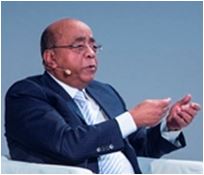
Mo Ibrahim delivers IFAD lecture, canvasses creating opportunities for African youngsters


Globally recognized entrepreneur and founder of the Mo Ibrahim Foundation, Dr Mohamed Ibrahim, at the weekend delivered the annual lecture for the International Fund for Agricultural Development (IFAD), canvassing for the creation of opportunities for African youngsters in agriculture, reports NaijaAgroNet.

Dr. Ibrahim who spoke in Rome, took African governments to task for not living up to their commitments to invest in agriculture and rural development, stressing that its essential that they create opportunities for young people in agriculture so that they are able to resist the dangerous call of extremism. 

“No jobs, no hope,” he said, adding that Africa has more hungry, malnourished people than anywhere else in the world. “We are by far the least productive region in the agriculture sector but because we have more uncultivated, arable land than anywhere else, it presents opportunities.”

NaijaAgroNet equally gathered that a private-sector panel which included Sunny Verghese, Co-founder and Group CEO of Olam International, highlighted the need for bold initiatives to better link smallholder farmers to markets. Panel participants emphasized that everyone – government, the private sector, financing institutions such as IFAD, small- and medium-sized enterprises and smallholders farmers – have a role to play. 

While the second panel discussion, facilitated by IFAD Associate Vice President Périn Saint Ange, focused on innovative agricultural solutions to many of the global challenges discussed over the two days, including IFAD investments in farming technologies, approaches to empower women and youth, and the use of new technology to enhance rural development project design and management.

Dr Ismahane Elouafi, Director General of the International Centre for Biosaline Agriculture, told correspondent that the world is at a crossroad in terms of its overuse of natural resources, and that the Middle East and North Africa region already has some of the highest water scarcity in the world.

"Climate change impacts the poor and marginalized most of all,” she said, underlining that they have huge challenges ahead, and there is need to act now.

NaijaAgroNet further gathered that some of the outcomes from the Farmers’ Forum, a two-day meeting held in conjunction with IFAD’s Governing Council, organizers announced a plan to make the platform for dialogue more inclusive, inviting pastoralists and livestock breeders to take part, and more decentralized creating stronger links to smallholders and family farmers on the ground.

+Remmy Nweke (ITRealms) +Naija AgroNet

... Linking agrobiz, sustainable environs, people & technology
Pix: Mo Ibrahim
Continue reading

Action against widespread mycotoxin contamination

17 February 2016. Lyon, France. A Working Group of world-leading experts convened by the International Agency for Research on Cancer (IARC) with support from the Bill and Melinda Gates Foundation (BMGF) reviewed the health effects of aflatoxins and fumonisins.

The panel concluded that these mycotoxins are not only a cause of acute poisoning and cancer but are also a likely contributor to the high levels of stunting in children in affected populations.

The Working Group also identified effective measures to reduce exposure in developing countries. These recommendations have been published in the report Mycotoxin Control in Low- and Middle-Income Countries, which is available in English, French, and Spanish.
“The report stresses the need for a coordinated international response to the problem of mycotoxin contamination of food,” says Dr Christopher Wild, Director of IARC. “Its health impact has been neglected for too long. We have the tools to make a difference. Now we must find the political will.”
An estimated 500 million of the poorest people in sub-Saharan Africa, Latin America, and Asia are exposed to the pervasive natural toxins, aflatoxins and fumonisins, on a daily basis by eating their staple diet of groundnuts, maize, and other cereals. Exposure occurs throughout life at levels far in excess of internationally accepted norms. This contrasts starkly with the situation in developed countries, where people and livestock are protected by good agricultural practices, regulation, and legislation.

Exposure to mycotoxins at these high levels substantially increases mortality and morbidity.
Aflatoxin is a cause of human liver cancer, and fatalities from outbreaks of acute aflatoxin poisoning occur in Africa and Asia. Evidence from population studies and the effects of the toxins in animals also suggest that mycotoxins contribute to stunting in young children.
“Worldwide, more than 160 million children younger than 5 years are stunted. Improving mycotoxin control could have a far-reaching health benefit,” says Dr J. David Miller, Chair of the IARC Working Group. “It is time to put the existing knowledge and technology into action to control mycotoxin food contamination in low-income countries.”
The panel also evaluated 15 interventions against mycotoxins, considering the strength of the evidence as well as its completeness and transferability at an individual, community, or national
level. Four of the measures were judged to be ready for implementation.
“The IARC Working Group Report’s recommendations provide a reliable foundation for investment of public, nongovernmental organization, and private funds to tackle this neglected problem,” says Dr Sindura Ganapathi of the Global Health Program at the BMGF. “What is needed now is effective translation of the vast body of science through to subsistence and smallholder farmers in order to make a difference.”
Download the report:
http://www.iarc.fr/en/publications/pdfs-online/wrk/wrk9/IARC_publicationWGR9_full.pdf

Download the brief:
PRESS RELEASE N° 242 17 February 2016 New IARC report urges action against widespread mycotoxincontamination in developing countries

See the video interview with Dr Christopher Wild, Director of IARC
http://www.iarc.fr/en/media-centre/iarcnews/2016/DIR-video-mycotoxins.php
Share
Continue reading

Innovation platforms in rice value chains

1-5 February 2016. Cotonou, Benin. AfricaRice held its 2016 Science Week and Global Rice Science Partnership (GRiSP)-Africa Forum. The Science Week served as the annual review, reflection and planning event for the Center and its research and development partners from around the world. It is held under the framework of the Global Rice Science Partnership (GRiSP), a CGIAR Research Program on rice.

International and national rice research and development partners from the public and private sectors, including representatives of national research and extension programs of about 30 African countries participated in this event.

The main objectives of the 2016 AfricaRice Science Week and GRiSP-Africa Forum were to discuss results obtained in 2015 and carry out effective and efficient planning of rice research-for-development (R4D) activities in 2016.

In addition to updates on GRiSP-Africa R4D activities and meetings of the Africa-wide Rice Task Forces and the Rice Sector Development Hubs, the Science Week’s program included among others brainstorming sessions on improved seed delivery, long-term agronomic trials related to soil fertility management, knowledge sharing and innovation platforms in rice value chains.

Related:
Published on 22 Dec 2015. A video on the improved GEM parboiling rice system, which has started to make a difference in the lives of over 450 women rice parboilers in the Glazoué rice hub in Benin, has been produced.

AfricaRice has developed and established the GEM system in Glazoué using an innovation platform approach along the rice value chain thanks to the project "Support to Agricultural Research for strategic crops in Africa" (SARD-SC) with funding from the African Development Bank (AfDB).

Appropriate training has allowed women to explore the GEM method and its advantages that include the following:
  • Reduction of post-harvest losses; 
  • Parboiling a large quantity of rice in a limited period of time; and 
  • Improving the quality of rice that better meets consumer demands. 
The innovation platform approach has promoted the creation of good business relations between the various stakeholders in the rice value chain by bringing together all the stakeholders.

As a result, rice consumers are progressively being attracted to the locally produced parboiled rice in Glazoué, leading to increase in incomes of women parboilers. In addition to the beneficiaries from Glazoué rice hub, the training included women processors from Malanville in northern Benin and 10 young entrepreneurs.
Share
Continue reading