











ICT helps to monitor crop growth – FAO


The Director General José Graziano da Silva has said at a meeting of agriculture ministers of the G20 in China that Information and Communication Technology (ICT) helps in monitor of crop growth, reports NaijaAgroNet.
He also said that this would promoting sustainable agriculture requires a renewed focus on innovation and investment in research, technology and capacity development,
"ICT helps in the monitoring of crop growth, utilization of new techniques, field management and harvests,” the FAO Director-General said, stressing that it has also become an essential tool for improving people’s livelihoods and welfare while advancing social justice and ensure equal access to opportunities, particularly in rural areas.
Telecommunication tools, he told NaijaAgroNet, have the potential to provide Internet access for millions of people and connect farmers with digital agriculture. This includes the use of mobile phones to report animal disease outbreaks, which is one area FAO has been supporting in recent years.
Among the innovative ways FAO is using ICT, Graziano da Silva highlighted a new partnership with Google, whose satellite data and processing power will usher in an unprecedented level of environmental literacy, especially on forestry and fisheries, he said.
... Linking agrobiz, sustainable environs, people & technology Conflicts, Droughts Exacerbate Food Insecurity

Drought linked to El Niño and civil conflict has pushed the number of countries currently in need of external food assistance up to 37 from 34 in March, according to a new FAO report.
The new edition of the Crop Prospects and Food Situation report sighted by NaijaAgoNet, adds that Papua New Guinea, Haiti and Nigeria to the list of countries requiring outside help to feed their own populations or communities of refugees they are hosting.
In Haiti, NaijaAgoNet gathered the output of cereals and starchy roots in 2015 dropped to its lowest level in 12 years. Around 3.6 million people, more than one-third of the population, are food insecure, almost half of them "severely", while at least 200 000 are in an extreme food emergency situation.
According to the report, Haiti's woes are largely due to El Niño, which has also exacerbated the worst drought in decades in Central America's dry corridor.
In Southern Africa, El Niño impacts have significantly worsened food security and the 2016 cereal harvest currently underway is expected to drop by 26 percent from the already reduced level of the previous year, triggering a "substantial rise" in maize prices and import requirements in the coming marketing year.
Isaac Oyimah/GEE
Opinion: No option but to innovate for business of agriculture
Of all the challenges that Africa faces, there is one that transcends and embraces all the others: I mean agriculture. Our continent today runs the risk of missing a unique opportunity to develop and offer its youth the jobs it has the obligation to provide if it wants to avoid social implosion.
Agriculture, which employs or provides livelihoods to 60% of the population while contributing 20-30% to Africa’s GDP, is the sector that could by itself enable to save the greatest number of Africans from extreme poverty while giving them their dignity back.
And yet, it typically attracts less than 5% of lending from financial institutions on the continent, leaving farmers and agricultural enterprises starved of the capital they need to operate and grow their businesses.
The scope for growth is all the more important that the situation is highly paradoxical: Africa imports the equivalent of $ 50 billion of food every year. Yet more than half of the arable land unexploited in the world are on the continent!
The 12th CAADP PP taking place in Ghana this week is organised around the theme “Accelerating Implementation of CAADP through Innovative Financing and Renewed Partnership”. The theme reflects the urgency being placed on implementation by the African Union and its members.
To solve the agricultural equation, we must join forces and continue our efforts to define a common agricultural policy. In 2003, in Maputo, we really started to turn the corner in laying the foundations for pan-African agricultural initiatives. The Heads of State and Government of the African Union then decided to devote 10% of their national budgets to agriculture. In 2014, in Malabo, they reiterated their commitment to further increase investment, both public and private, in agriculture.
Innovative financing will be key in unlocking Africa’s Green Revolution. Innovative financing is a means of mobilizing additional resources for investment in agriculture or solving long-running market failures that can unlock private investment. Now we should aim at a growth model that is public-sector enabled, and private sector scaled.
Because of the rural and dispersed nature of agricultural production, where banks and formal financial institutions often lack a presence, mobile technology provides a convenient and low-cost distribution channel to reach farmers and agro-enterprises with electronic payments and information products, as well as savings, credit, and insurance products, among others. It can also help to transfer targeted financial support for small farmers and agribusiness.
Investments in infrastructure will also help drive increased private investment and production in the agriculture sector. Often resulting in public goods that benefit a broad base of economic activity, investments in irrigation, transport and market infrastructure in particular are critical to improving economic returns and productivity in the agriculture sector.
The next step is to put in place a system that ensures the prices and the flow (or storage) of production, combined with a system of variable levies at the external borders of Africa (taxes on imports) protecting productions potential competition from products from outside. This will require innovative financial mechanisms and technologies as well.
A proactive agricultural policy should be common because it requires us to share not only our resources, but also our minds and our wills. It should be common because it cannot be implemented without regional infrastructure, energy and logistics in particular, that will allow our farmers to compete and enter into a process of value creation. We should harness the latest innovations and technologies because Africa has no other option but to leapfrog if it wants to realize its tremendous potential.
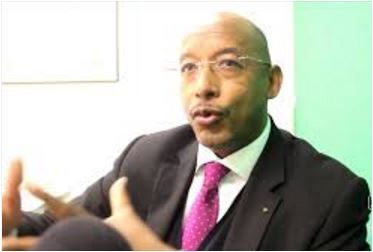
*A contribution by Ibrahim Assane Mayaki is CEO of the New Partnership for Africa's Development (NEPAD).
... Linking agrobiz, sustainable environs, people & technology 